
Green Cruising?

Cruise lines dodge states' tougher rules
by dumping in Canadian water

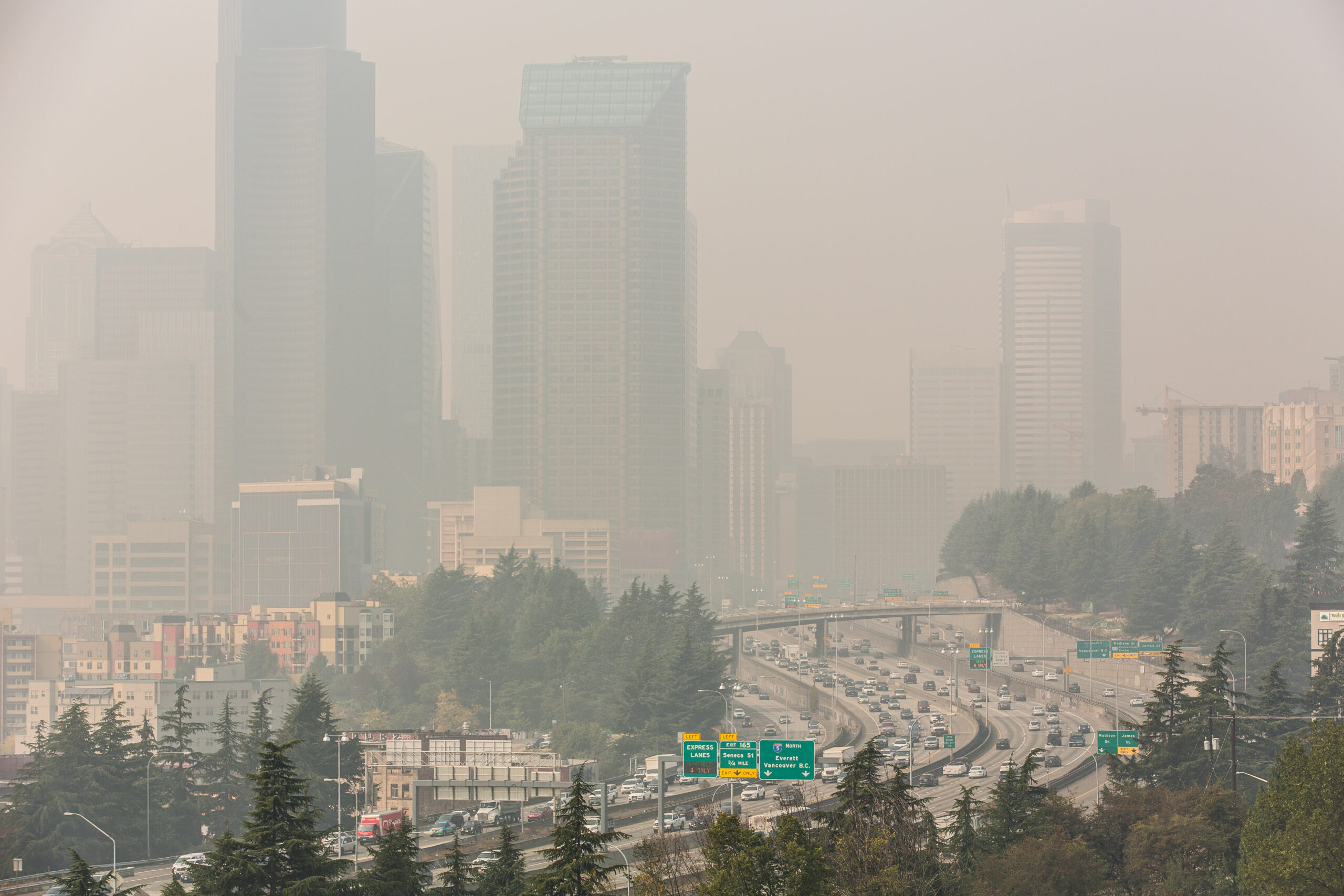
The Holland America Lines Amsterdam docked at the Port of Seattle's Smith Cove
cruise ship terminal • Paul Joseph Brown / InvestigateWest


By Lee van der Voo
InvestigateWest

After a week aboard the Carnival Spirit, its passengers can’t help but hit the pier a little tired. They’re grinning too, even as they struggle with baggage and finding their hotels and taxis to the airport. Their vacations on the ship, standing 13 decks tall behind them, are still fresh in their minds. With its 16 lounges and bars, three restaurants and four swimming pools – one with a cascading water slide – the Spirit offered quite an adventure for the 2,124 people on board.

Owned by Carnival Cruise Lines, the biggest cruise operator in the world, the Spirit docks weekly in Seattle’s Elliott Bay. It’s the biggest of the ships home-ported in Seattle in 2010. And its size is also a symbol of the burgeoning Alaska cruise market increasingly making Seattle its home and expected to bring nearly 900,000 tourists through Seattle by the end of the 2010 cruising season in October.

Lifesaving Drugs, Deadly Consequences

Healthcare worker? Take our survey here.

Read the full story here

Secondhand chemo – like secondhand smoking – is an apt description for disease that occurs after chronic exposure to low doses of a drug intended for someone else. And like secondhand tobacco exposure, it can have deadly consequences.

 An InvestigateWest investigation has found that the federal Occupational Safety and Health Administration does not regulate exposure to chemotherapy in the workplace, despite multiple studies documenting ongoing contamination and exposures and their potentially deadly consequences for human health. Studies as far back as the 1970s have linked increased rates of certain cancers to nurses and physicians. Occupational health experts believe that’s because when nurses, pharmacists,technicians and increasingly, even veterinarians, mix and deliver the drugs, accidental spills, sprays and punctures put  them in close, frequent contact with hazardous drugs. These are drugs that can save lives of cancer patients, but ironically, are also human carcinogens themselves.

 A just-completed study from the U.S. Centers for Disease Control, 10 years in the making and the largest to date, confirms that chemo continues to contaminate the work spaces where it’s used, and in some cases is still being found in the urine of those who handle it, despite knowledge of safety precautions.

Lifesaving Drugs, Deadly Consequences

‘Secondhand chemo’ puts healthcare workers at risk


Healthcare worker? Take our survey here.


Chelsea Crump kisses her mother, Sue Crump


By Carol Smith
InvestigateWest

Sue Crump braced as the chemo drugs dripped into her body. She knew treatment would be rough. She had seen its signature countless times in the ravaged bodies and hopeful faces of cancer patients in hospitals where she had spent 23 years mixing chemo as a pharmacist.

At the same time, though, she wondered whether those same drugs – experienced as a form of “secondhand chemo” -- may have caused her own cancer.

Chemo is poison by design. It’s descended from deadly mustard gas first used against soldiers in World War I. Now it’s deployed to stop the advance of cancer.

Crump knew she had her own war on her hands. She wanted to live long enough to see her 21-year-old daughter, Chelsea, graduate college.

And she wanted something else: She wanted young pharmacists and nurses to pay attention to her story.

Crump, who died of pancreatic cancer in September at age 55, was one of thousands of health care workers who were chronically exposed to chemotherapy agents on the job for years before there were even voluntary safety guidelines in place.

Campus sexual assault: Does 'honor code' system squelch justice at Oregon school?

By Lee van der Voo

InvestigateWest

Three young women tell similar stories of being discouraged from calling police after reporting sexual assault to Reed College authorities, and of a campus investigatory process so intensely secretive one student was unsure she could even talk to her parents about it. The students’ allegations were not vetted by trained investigators or faculty, but by a student board without expertise in sexual assault.

Former Reed administrator Lisa Moore, a licensed social worker, confirms she took one of the students to the health center when she came to her crying and saying she had been raped by a former boyfriend in January of 2009, but did not know the student was later turned away without an appointment. Moore has since left Reed and now works at Boston University, in part because of her inability to change the Reed system. None of the recommendations of a sexual assault task force she assembled has been implemented, she said.

Two outside experts in how colleges handle sexual assaults criticized the system used by 1,400-student Reed, a highly secretive process based on a student Honor Code and enforced by a student Judicial Board, in which students act as a fact-finding committee and participants are barred from discussing their cases with anyone except a designated advocate, a procedural aide and medical professionals.

Sexual Assault on College Campuses: A Culture of Indifference

Stephanie S. reported being sexually assaulted in a University of Washington dorm room in 2001.  photo by Dan DeLong/special to InvestigateWest

Many college women say their experiences after being sexually assaulted -- often in date rape situations -- illustrate a culture of indifference and denial that results in one in five young women being assaulted during their college years. Unclear and conflicted internal disciplinary systems can compound their suffering, according to this series by InvestigateWest journalists Carol Smith and Lee van der Voo and edited by Rita Hibbard.

Robert McClure's picture

Study sees parking lots dust as cancer risk

Chemicals in a cancer-causing substance used to seal pavement, parking lots and driveways across the U.S. are showing up at alarming levels in dust in American homes, prompting concerns about the potential health effects of long-term exposure, a new study shows.

The substance is coal tar sealant, a waste product of steel manufacturing that is used to protect pavement and asphalt against cracking and water damage, and to impart a nice dark sheen. It is applied most heavily east of the Rockies but is used in all 50 states.

Syndicate content

About the project

What happened to one young woman who reported being sexually assaulted on a college athletic club trip and another who reported being raped by a college athlete she casually dated is not unique -- their lives fell apart, and the men they accused suffered little or no consequences, InvestigateWest journalists reveal in this series. We show the high prevalence of drugs and alcohol in sexual assaults, the lack of training provided to students to recognize and deal with date-rape and non-consensual sexual situations, and the murky and sometimes conflicting disciplinary processes in place. The series is launched in concert with Seattlepi.com, KUOW-FM and the Spokane Spokesman-Review. This work was done in partnership with the Center for Public Integrity in a project that includes NPR and regional campus assault stories from four other members of the Investigative News Network - the Wisconsin Center for Investigative Journalism, the New England Center for Investigative Reporting, Texas Watchdog, and the Rocky Mountain News Network.

These stories illustrate the power of working together. Many of the young women whose stories are told here initially thought they stood alone; when their voices are joined as they are in a project of this magnitude, the scope of the problem begins to be visible. Read this groundbreaking work here, and remember that without your support for independent investigative reporting, this kind for work cannot be done.